

Wild Birds
What to do if you find a hatchling or a nestling
Nestlings are birds which are starting to get pin feathers (immature feathers which look like pins poking up through the skin) and still have some bald patches. They are vocal and their eyes are open.
They gape for food and are fully dependent on their parents. When found on the ground they need to be kept warm and require help – either from the ManxSPCA or Manx Wild Bird Aid.
What to do if you find a fledgling
Fledglings have most of their flight feathers and a stubby set of tail feathers and are able to hop, run and flutter.
Fledglings leave their nest just before they can fly, so it is normal to see them on the ground, and their parents will be nearby. If they are not in immediate danger from predation they should be left alone.
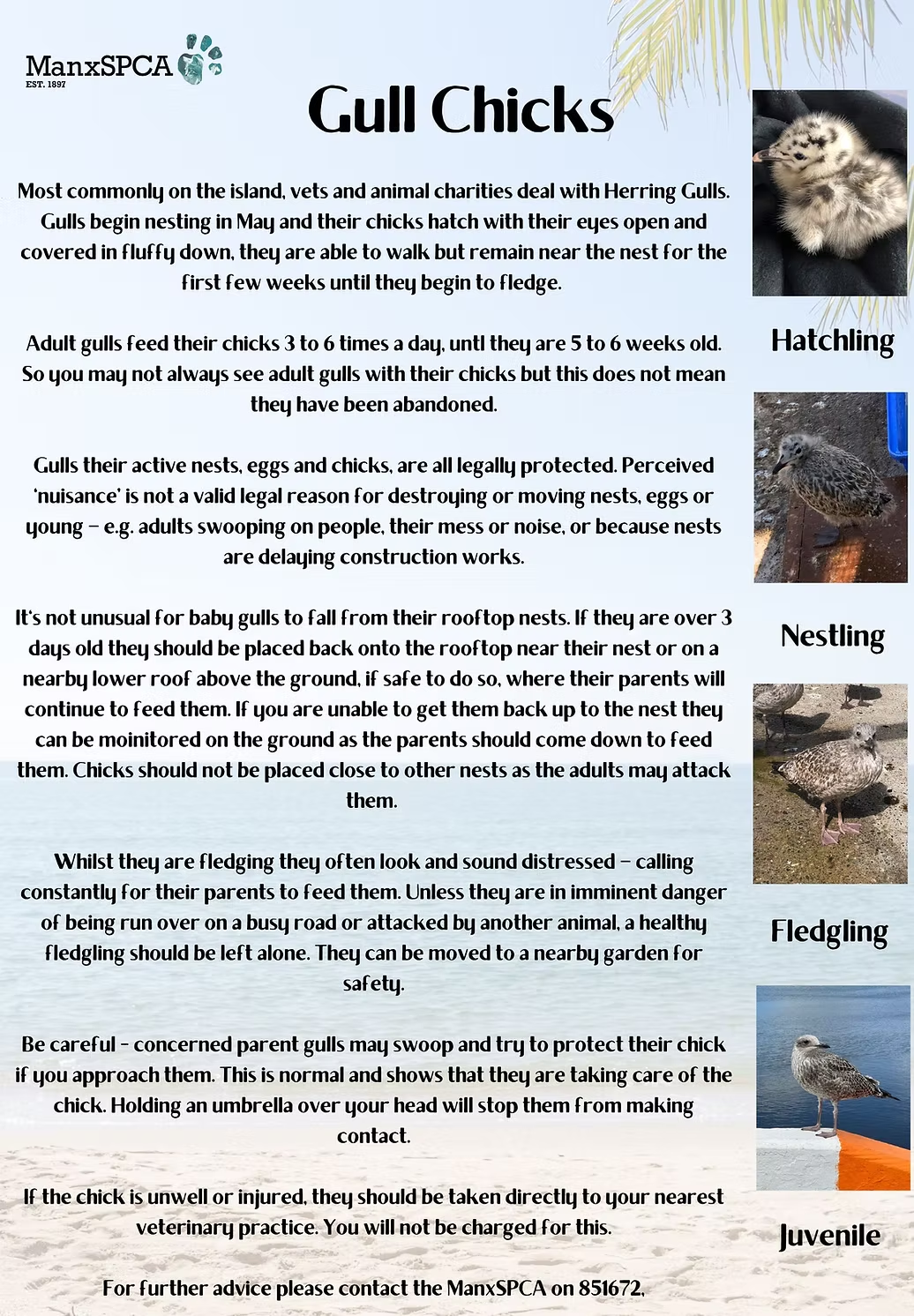
Gull chicks
Gull chicks hatch with their eyes open and are able to walk.
They are fed three to six times a day, so it is normal for the parent gulls to not always be with their chicks.
They often fall of roof tops and should be placed back near their nest or on a lower nearby roof, if safe to do so.
While they are on the ground learning to fly , they should be left alone – however, they can be moved into a nearby garden away from a road.
The herring gull
Herring gulls are very intelligent and they adapt to their environment as they seek out food and nesting places. It’s human behaviour that attracts them to urban environments – overfull dustbins and fast food leftovers are a good substitute for the herring gull’s preferred diet of fish (as its name suggests).
This close proximity can bring them into contact, and conflict, with humans but injuring or killing a gull is both immoral and illegal – gulls are a protected species under the Wildlife Act 1990, and anyone harming them or their nests (deliberately or unintentionally) is committing a criminal offence.
You might think that herring gulls are everywhere, and that there are too many of them. However, the species is declining significantly across the UK with its population having decreased by more than 50% in 25 years. They are on the ‘red list’ of threatened bird species, affording the herring gull the highest possible conservation status. Depleted fish stocks, the decline of the fishing industry and marine pollution, not least the amount of plastic in our seas, are the main causes of the decline in numbers.
Corvids (jackdaws, rooks, crows, magpies, etc.)
If found on the ground in the hatchling or nestling stage corvids need help. They go through a ‘branching’ stage after leaving the nest when they are fully feathered, they can hop and run but may not yet be able to fly. If they end up on the ground monitor from a distance to check if their parents continue to feed them, if not they will need help.
When fully feathered in the fledgling stage of development they can be monitored from a distance and left where they are unless in imminent danger or if they are injured.
However, rooks are slightly different as their parents will not continue to feed them if they leave the nest too early and end up on the ground. Rooks tend to nest in tall trees in groups known as rookeries. If you find a young rook below a rookery, please contact us or Manx Wild Bird Aid for further advice.
Pigeons and doves
Young pigeons and doves are known as squabs.
Any squab found on the ground younger than the fledgling stage needs help.
If the nest they have fallen from is accessible they can be placed back inside and monitored to check if the parents are still caring for them.
Ducklings
Ducklings are precocial which means that they hatch with their eyes open, with a dense and well-developed down cover.
They can walk and find their food after a few hours of hatching and leave the nest within a day or two.
If you find a lone duckling, or brood without the mother duck, firstly observe incase the mum is nearby. If she isn’t, these ducklings will need help.
Manx Wild Bird Aid
The ManxSPCA works closely with Manx Wild Bird Aid to rehabilitate sick, injured or orphaned wild birds and return them to the wild.
For more information please visit their website: https://www.wildbirdaid.com/
How to help
If it’s safe to catch and contain the bird this should be done very carefully. Whenever handling wild animals you should wear gloves and hold the animal away from your face. Always use common sense and, if unsure, seek additional advice or assistance.
A secure cardboard box with ventilation holes, lined with a towel or newspaper, is ideal. Keep the contained animal as quiet as possible and either take it to a vet or the ManxSPCA. If you don’t have a box available you can use a blanket or coat to wrap the animal in, making it feel secure.
Personal hygiene should be taken into consideration when and after handling any animal – whether it is domestic, wild, dead or alive . Obvious dangers include bites, scratches and disease transmission.
Injured birds and wild animals should be taken directly to a veterinary practice where they will be given emergency treatment free of charge.